> For the complete documentation index, see [llms.txt](https://docs.researchhub.com/llms.txt). Markdown versions of documentation pages are available by appending `.md` to page URLs; this page is available as [Markdown](https://docs.researchhub.com/researchhub/product-features/bounties.md).
# Bounties
Create and earn bounties for scientific content
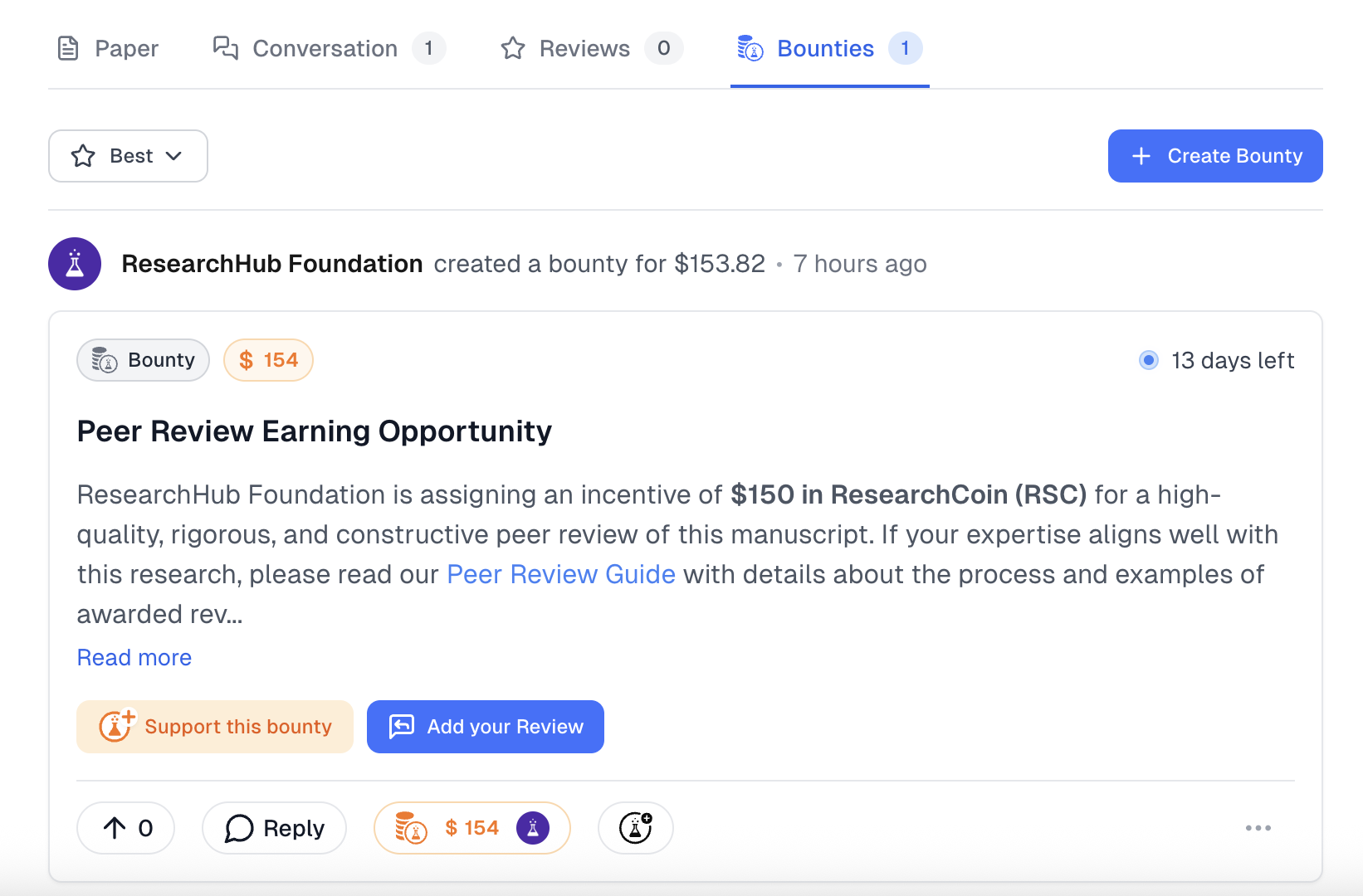
By creating a bounty, you are able to financially incentivize other ResearchHub users to create specific kinds of content that you are interested in. For example:
* If you want someone to peer review your new manuscript, place a `Peer Review` bounty on it
* If you want help with a new method in your lab, create an `Answer to Question` bounty
There are two ways to create bounty on ResearchHub. You can add a bounty to any kind of content, be that a post that you published on ResearchHub as a question to be answered, or a comment that you made under another user's post for clarification.
ResearchHub’s bounty feature targets specific individuals or groups with relevant expertise to address a research challenge or complete a task.